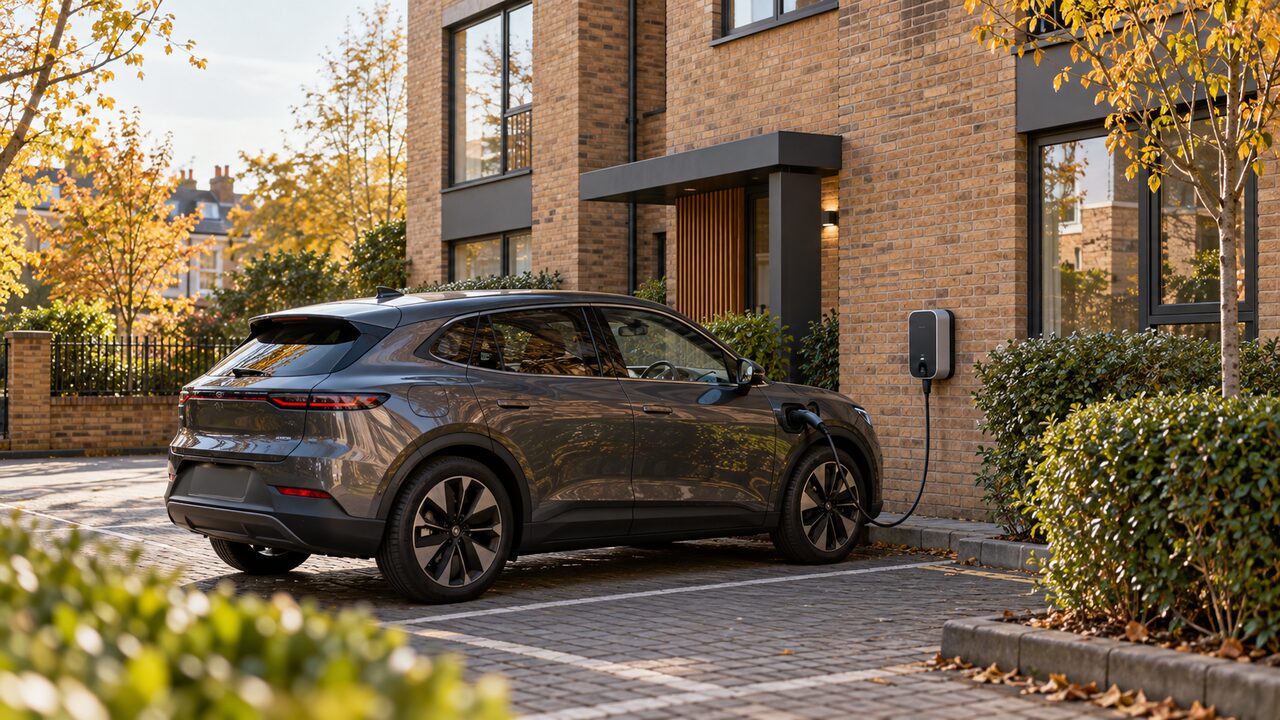
Electric vehicles are becoming a more visible part of London life, but for many tenants the biggest obstacle is still simple: where can they charge at home?
For landlords with suitable off-street parking, there is currently a government grant that can reduce the cost of installing residential chargepoints. The Office for Zero Emission Vehicles scheme is in its final funded year and is scheduled to remain available only until 31 March 2027. That makes this autumn a sensible time to investigate whether any properties in your portfolio qualify—before arranging work or promising a facility to tenants.
The grant will not suit every building, and installation should still be judged on its practical and commercial merits. However, where the parking, electrical supply and tenant demand align, it may help landlords future-proof a property at a lower upfront cost.
What the grant currently offers
Eligible residential landlords can claim 75% of the purchase and installation cost, up to £500 per chargepoint socket. Grants are available for up to 200 sockets per year across an applicant’s sites.
The 200-socket allowance applies to a group as a whole where organisations are under common control. Landlords operating through several connected companies should therefore not assume that each company receives a separate allowance.
Funding is confirmed until 31 March 2027, but the government reserves the right to alter or end the scheme. Its guidance says it aims to give four weeks’ notice and honour qualifying claims made before an announced change. In practice, landlords should avoid leaving applications until the final weeks.
Who can apply?
The scheme covers more than individual landlords. Eligible applicants can include private landlords, companies owning the freehold of multi-unit buildings, Right to Manage companies, residents’ management companies, registered social housing providers and property-management companies acting for landlords.
For private-sector applicants, the organisation must be registered at Companies House or VAT-registered with HMRC. The property can be a house, flat or apartment block, including communal areas of a multi-unit residential building.
Crucially, every parking space included in the application must be:
- private, off-street and clearly defined;
- accessible to the tenant;
- owned by the applicant, or subject to a legal right allowing its use; and
- suitable for safe charging.
The parking space does not have to form part of the property itself, but any necessary rights and permissions must be secured before work starts—particularly if cables or equipment cross land belonging to someone else.
The most important exclusions
One of the easiest mistakes is installing first and trying to claim afterwards. The chargepoint must not be installed before OZEV confirms grant eligibility.
The scheme also excludes owner-occupiers applying for the home in which they live, properties used solely as holiday accommodation, and applicants without the required company or VAT registration.
Funding is not available where installation is already mandatory. This may apply, for example, because of England’s Part S building regulations for certain new buildings or major renovations, or because a planning condition requires chargepoint infrastructure. Grant support is designed to encourage voluntary provision, not to subsidise work the owner is already legally obliged to complete.
How the application works
The first step is to contact an OZEV-authorised installer and obtain a quote for an eligible chargepoint. The landlord then applies through the government service and supplies the required evidence.
Depending on the type of applicant and property, supporting documents may include a current rental-property insurance policy, the Land Registry title, company appointment records or a management agreement authorising the agent to act.
If the application is approved, both the landlord and installer receive confirmation. Once the installation is completed, the installer claims the grant and deducts it from the landlord’s invoice. This structure means the grant should appear as a reduction in the amount paid rather than as a later cash reimbursement to the landlord.
Look beyond the grant amount
A £500 contribution can be valuable, but it should not be the only reason to proceed. Before installation, landlords should assess the electrical capacity of the building, the position of the parking bay, lease or freehold permissions, fire-safety implications and how electricity use will be measured and paid for.
Government guidance also expects applicants to complete any necessary supply upgrades, arrange regular maintenance checks, decide responsibility for running costs, keep the chargepoint accessible and update the property’s risk assessment.
For a single house with a driveway, the practical questions may be straightforward. In an apartment block, they can be more involved: cable routes, load management, permissions, billing and future expansion all need planning. A well-designed shared solution may be more useful than installing isolated equipment without considering how demand could grow.
Could a chargepoint strengthen a rental property?
An EV charger will not automatically justify a rent increase or transform an investment. Its value depends on the location, tenant profile, parking arrangement and quality of installation.
Nevertheless, reliable home charging can be a meaningful convenience for tenants who already drive an electric vehicle or expect to switch. In properties with private parking, it may help a listing stand out and reduce the risk that the building becomes less competitive as tenant expectations change.
The best approach is to start with demand. Ask whether current or prospective tenants would use the facility, obtain a proper electrical assessment and compare the net installation cost after the grant with the likely long-term benefit to the property.
Act early, but carry out the checks first
With the current scheme scheduled to close on 31 March 2027, landlords have a limited window to explore the opportunity. That does not mean rushing into an unsuitable installation. It means identifying qualifying properties now, gathering permissions and quotes, and applying in the correct order.
Hampshire Heights supports landlords and property owners across London with practical property management, lettings and portfolio advice. If you would like help reviewing a property’s rental appeal or planning improvements that suit your tenants and investment strategy, contact our team.
Hampshire Heights Ltd
Telephone: 020 3976 8331